
22+ Work Hairstyles Women for Thick Hair 2026
Thick hair is a gift and a full-time job. It looks incredible — but it slips out of elastics, snaps bobby pins, turns buns into lopsided lumps, and takes approximately forever to dry. Most hairstyle tutorials are demonstrated on fine hair, which is why half of them fail you by 10 a.m.
These 22 styles are chosen specifically for thick, heavy, lots-of-it hair. Bigger hold, smarter pinning, styles that use your volume instead of fighting it — every one office-appropriate and tested against the realities of serious density.
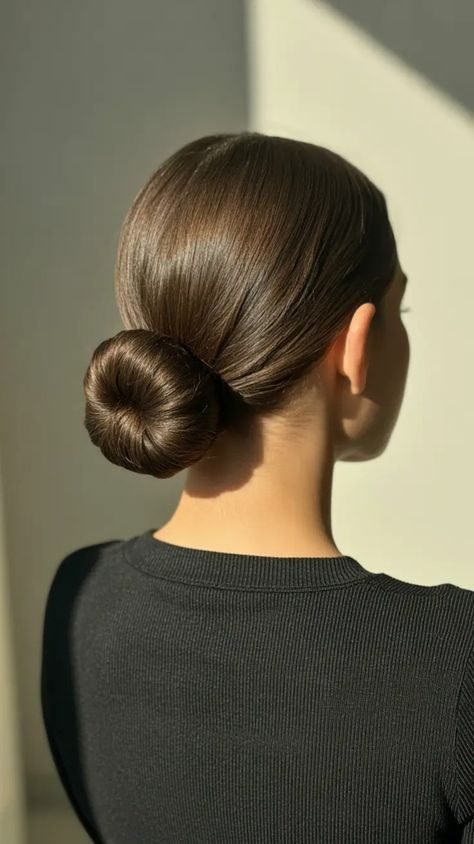
1. The Thick-Hair Low Bun That Actually Holds
Let’s address the elephant in the room: most low buns fall apart on thick hair because there’s simply too much of it for a couple of pins. The fix is sectioning. Split your low ponytail into two or three sections, twist each one separately, then wrap and pin them one at a time around the base.
Each smaller twist is easier to control and pin securely — and the layered result looks fuller and more textured than a single-wrap bun anyway. Use large bobby pins (the 3-inch kind, not the mini ones) and push each pin into the bun’s core, not just the surface. Finish with strong-hold spray.
2. The Heavy-Duty High Ponytail
A thick high ponytail has presence — but it also has gravity working against it. The sagging-by-lunch problem is real, and the solution is structural.
- Double up: Stack two thick elastics instead of one — the hold multiplies
- The flip trick: Split the ponytail, clip the top half up, and place 2-3 bobby pins vertically under the base for lift, then drop the hair back down
- Wrap it: A strand wrapped around the base isn’t just pretty — it adds friction that prevents sliding
- Section drying: If it’s damp underneath, the weight pulls — make sure the nape is fully dry

3. A French Twist for Lots of Hair
The French twist was practically invented for thick hair — all that volume creates a gorgeous, substantial roll instead of a skinny one. Gather everything at the nape, twist upward firmly (you’ll need a strong twist to contain the weight), and tuck the ends inside.
💡 Quick Tip: For thick hair, pin in an X pattern — two pins crossed over each other at each anchor point. Single pins lever out under the weight; crossed pins lock.
You’ll use more pins than the tutorials say — that’s normal, not failure. Ten to twelve large pins for thick hair is standard. The payoff is a twist with real presence that stays put all day.

4. The Big Braided Bun
If your hair laughs at regular buns, braid it first. A thick three-strand braid contains the volume into one manageable rope, and wrapping that rope into a bun gives you a big, beautiful, architectural shape instead of a shapeless mass.
Braid the ponytail fairly tightly — loose braids on thick hair expand into something enormous. Wrap the braid around the base, pinning every inch, and tuck the tail underneath. Pancake the braid slightly before wrapping if you want extra width. This bun has real visual weight, which makes it perfect for formal work events.

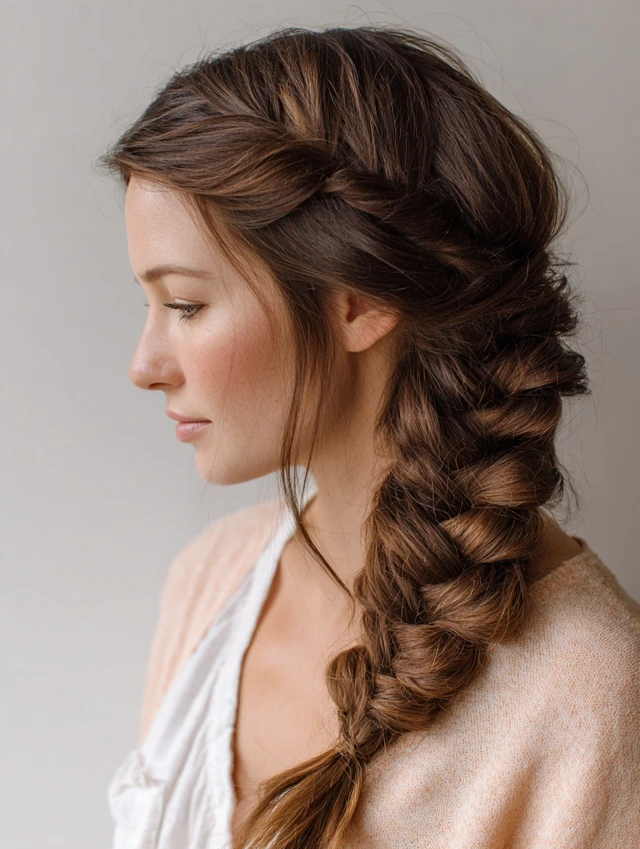
5. The Thick Side Braid
Here’s where thick hair wins outright: a side braid on thick hair looks like something from a shampoo commercial with zero effort. Sweep everything over one shoulder and do a loose three-strand braid — the natural volume does all the work.
Keep it soft rather than tight; a tight braid on thick hair can look rope-like and severe, while a loose one looks romantic and full. Tie with a substantial elastic (thin ones snap) and gently pull the edges for that thick, dimensional finish. Start the braid behind the opposite ear so it drapes naturally forward.
6. Double Dutch for Thick Hair
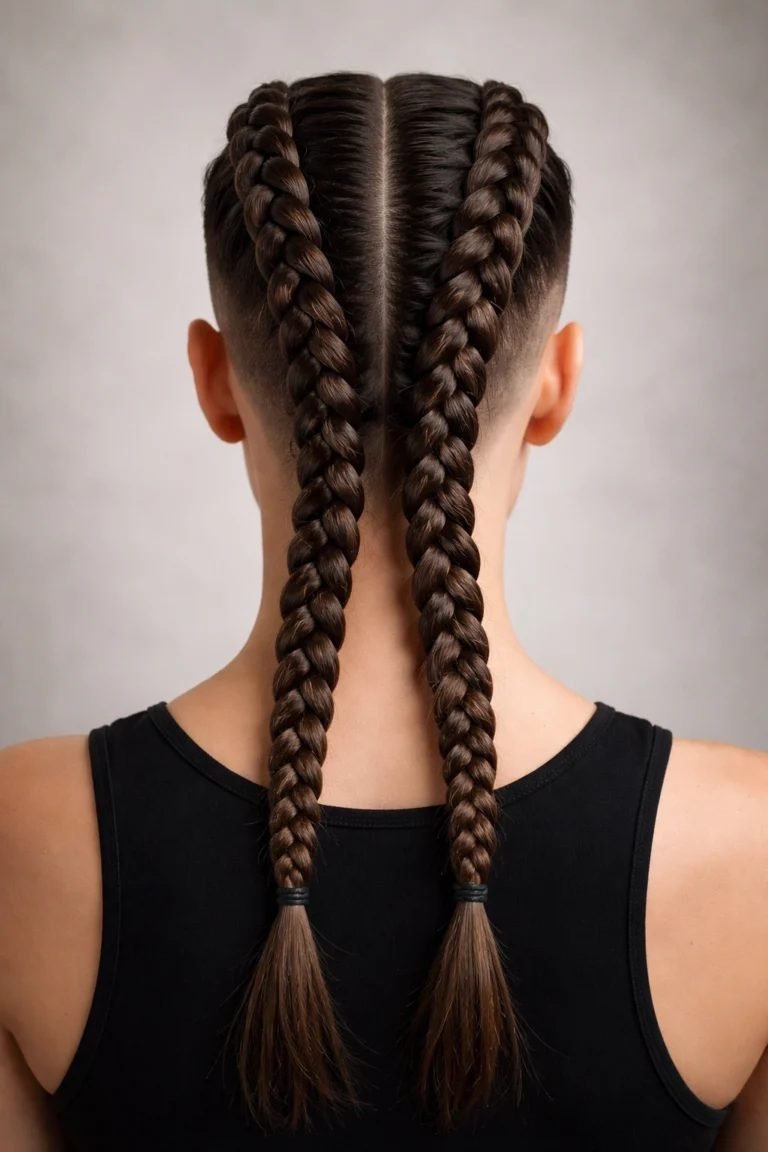
Double Dutch braids are a thick-hair superpower: they distribute weight evenly across your head instead of letting it all hang from one point, which means less pulling, less headache, and a style that genuinely lasts all day.
Part down the middle and Dutch-braid each side from the hairline to the nape — the raised braid pattern shows off thick hair beautifully. At the nape, twist the remaining length into two mini buns or tie into low ponytails. Because the weight is anchored along the whole braid, nothing sags or loosens. This is the ultimate long-day style.
7. The Voluminous Top Knot
Thick hair makes the best top knots — big, round, sculptural. The challenge is purely structural: that much hair wants to slide down. The fix is a solid foundation.
- Base first: Make the ponytail high and tight — the tighter the base, the longer it holds
- Section it: Split the ponytail in two, twist each, then wrap — easier to control than one massive twist
- Anchor deep: Push pins straight down into the knot’s core, not across the surface
- Balance: A top knot on thick hair has real visual weight — keep makeup and earrings simple

8. A Chignon That Tames Volume
The chignon’s twisted structure is ideal for thick hair because twisting compresses volume into a neat, controlled shape. Split a low ponytail into two sections, twist each one firmly (firm twists = less puff), then wrap them around each other at the nape and pin.
⚠️ Watch Out: Don’t fight your hair into submission when it’s freshly washed and slippery — thick, clean hair is the hardest to pin. This style works best on day-two hair, or with a generous mist of texturizing spray for grip first.

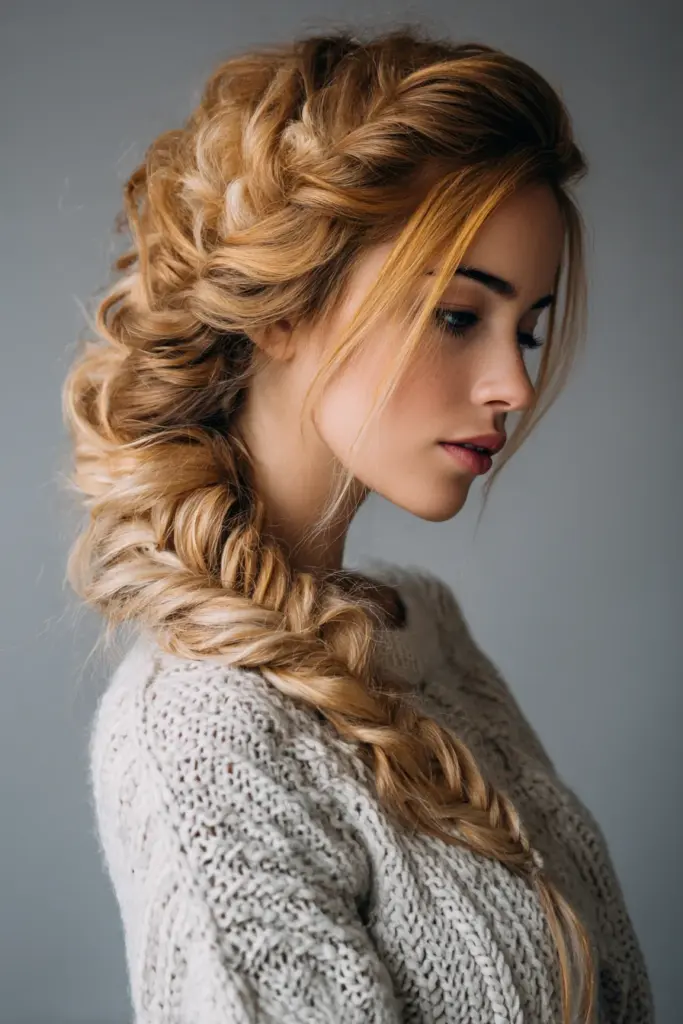
9. The Thick Fishtail
A fishtail on thick hair is genuinely stunning — the intricate pattern has so much hair to work with that it looks twice as detailed as on fine hair. Sweep everything to one side, split into two sections, and alternate crossing small pieces from outside to inside.
Yes, it takes longer with thick hair (more hair = more crosses), but the result is worth it. Keep your sections small for the most intricate look, and don’t pull too tight — a slightly relaxed fishtail on thick hair looks lush rather than severe. This is a weekend-effort style with weekday payoff if you braid it the night before.
10. The Rope Braid
The rope braid might be the easiest braid for thick hair, full stop. Split your hair into two sections, twist each section in the same direction, then twist them around each other in the opposite direction. The opposing twists lock together — the braid literally holds itself.
💡 Quick Tip: Keep constant tension while twisting. If you let go mid-braid, thick hair unravels fast — pin the top or have someone hold it, or braid with your head tilted so gravity helps.
Wear it over one shoulder or down the back. It looks intricate, takes three minutes, and the self-locking structure means it survives thick hair’s constant escape attempts.

11. The Milkmaid That Uses All Your Hair
Most updos fight thick hair’s volume. The milkmaid updo requires it — two substantial braids crossed over your head need real density to look right. On fine hair this style can look skimpy; on thick hair it’s magnificent.
Braid two low pigtails (not too tight), bring each up and over to the opposite side, and pin along the whole length. The braids should sit like a headband across the crown. Because you’re distributing all that hair across the top of your head, the weight balances beautifully — no pulling at the nape, no headache. Slightly loosen the braids for a softer finish.

12. The Crown Braid for Thick Hair
A crown braid on thick hair has genuine presence — a substantial braid circling your head looks regal rather than delicate. Dutch-braid along your hairline from a deep side part, working around to the other side, then tuck and pin the tail under the braid’s start.
The weight distribution here is the selling point: instead of all your hair hanging from one elastic, it’s anchored around your entire head. Your neck will thank you by 3 p.m. Use large pins and plenty of them — a thick crown braid needs serious anchoring, but once it’s in, it doesn’t move.

13. Sleek Straight on Thick Hair
Wearing thick hair down and straight to work is absolutely doable — it just needs the right prep, because thick hair’s enemy is puffiness, not flatness. The secret is sectioning: flat-iron in thin, small sections, and don’t rush.
- Prep: A smoothing blow-dry first — rough-drying thick hair straight guarantees frizz
- Product: Heat protectant, then a smoothing serum on the mid-lengths and ends
- Technique: Thin sections, slow passes, one pass each — speed causes rework
- Roots: Keep volume at the crown; flat-ironing roots flat on thick hair looks helmet-like

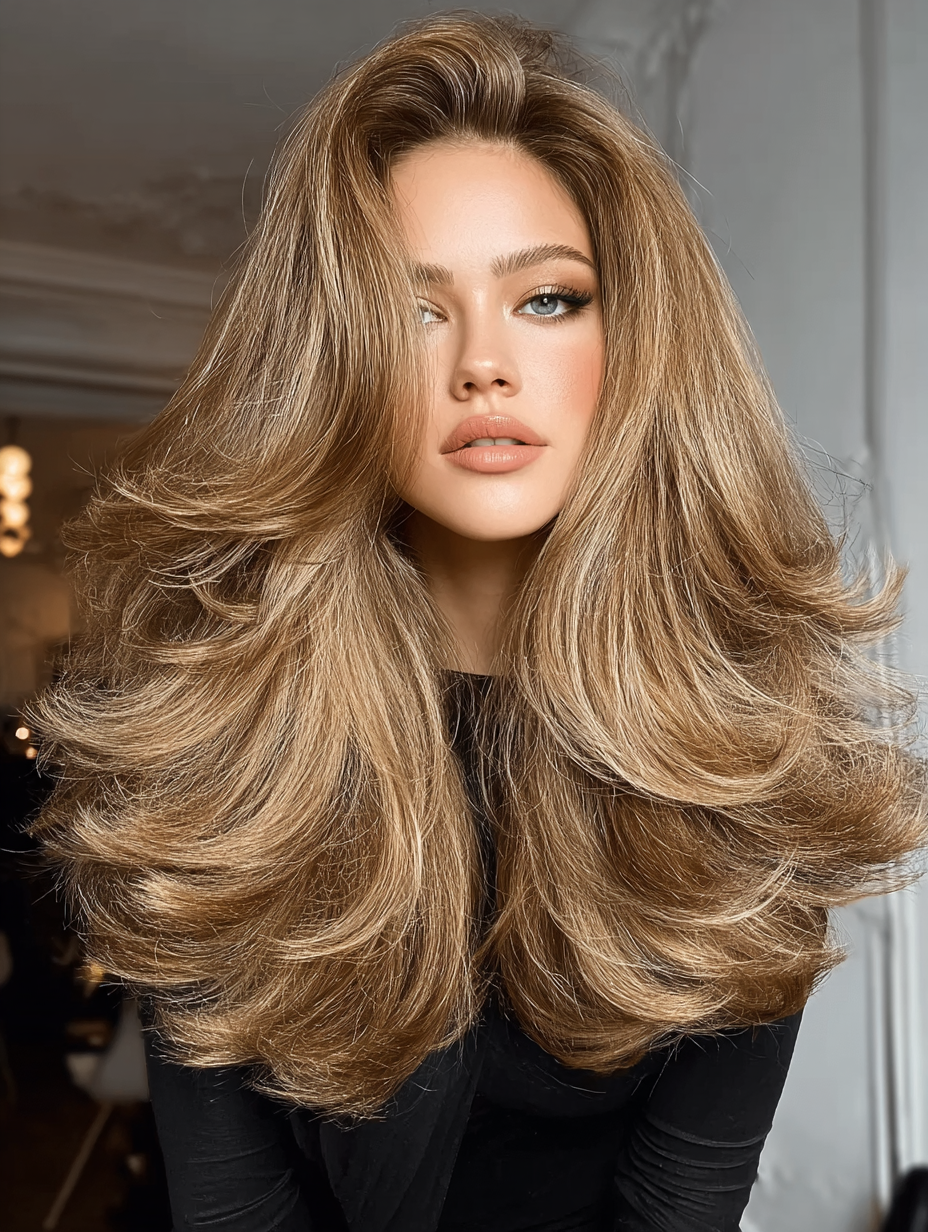
14. The Big Bouncy Blowout
If anyone was born for a bouncy blowout, it’s thick-haired women — you have the density for real, lasting volume that fine hair can only dream of. The key is getting the roots fully dry and lifted, because damp roots plus heavy hair equals flat by noon.
Work in sections with a large round brush, over-directing each section (pull it up and away from the head) for maximum lift. Cool each section on the brush before releasing — cool hair sets the shape. A root-lifting mousse applied before drying makes a visible difference. This blowout easily lasts two days with dry shampoo at the roots on day two.
15. Defined Curls, Office-Ready
Thick curly hair is glorious — and the office-ready version is all about definition over volume. Too much volume reads wild; defined, controlled curls read polished and intentional.
Apply curl cream and a light gel to soaking-wet hair in sections (sectioning matters — one glob of product on thick curls never distributes evenly). Scrunch, then diffuse or air-dry without touching. Once fully dry, scrunch out the gel cast for soft, defined curls. A light oil on the ends adds shine and tames halo frizz. The density that makes styling take longer also makes the result last for days.

16. The Thick Low Ponytail
A low ponytail on thick hair looks expensive — substantial, glossy, swinging. But it needs containment strategy, because one elastic on all that hair is a losing battle.
💡 Quick Tip: The two-elastic trick is non-negotiable for thick hair: stack two strong elastics, and the ponytail stays at full height all day instead of migrating south by lunch.
Keep the part clean and the crown smooth, wrap a thick strand around the base (thin strands get lost in thick hair), and smooth serum through the tail. Position at the nape for elegance. This is minimal effort with maximum polish — the hair does the talking.

17. Half-Up That Holds Volume
The half-up is gorgeous on thick hair — the top section has real substance — but it slides. The fix: don’t just elastic it. Take the top section, twist it once, then secure with an elastic and two crossed bobby pins anchoring the elastic to the hair underneath.
Take a slightly smaller top section than you think — too much weight in the half-up pulls it loose. Smooth the crown well, since bumps show more on thick hair. The result is the best of both worlds: controlled on top, glorious volume below. It also keeps hair out of your face without sacrificing the length you love.

18. The Claw Clip That Actually Grips
Standard claw clips snap or slide on thick hair — you need the XL size, and you need the right technique. The trick is twisting first: gather hair, twist it firmly upward (the twist compresses the volume), fold it, then clamp the big clip over the whole twist with the teeth biting into the base.
- Size: XL or jumbo — if the clip can’t close fully around your twist, it’s too small
- Material: Matte acetate grips better than shiny plastic, which slides
- Teeth: Long teeth that reach the scalp, not short decorative ones
- Backup: One bobby pin crossed through the clip’s hinge adds insurance

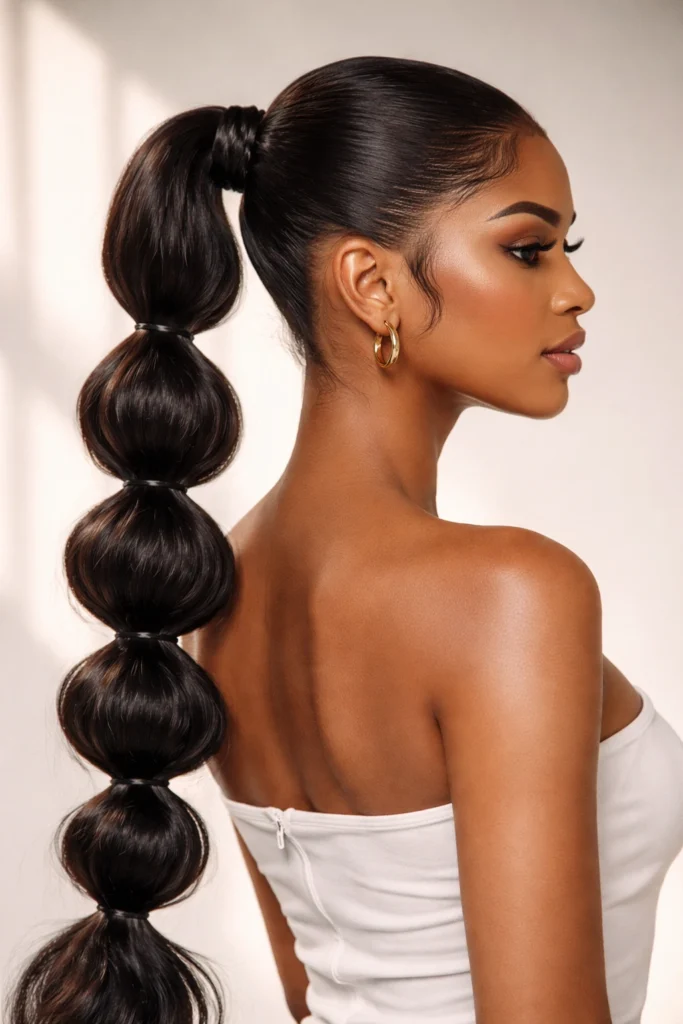
19. The Bubble Pony for Thick Hair
Thick hair makes the most dramatic bubble ponytails — each bubble is big and round with zero teasing needed. Secure a high or mid ponytail with a strong elastic, then add small elastics every few inches down the tail, puffing each section outward.
Because your hair has natural volume, keep the bubbles neat and even rather than over-puffed, or the style gets enormous fast. For the office, a mid-height bubble pony reads playful-polished; save the sky-high version for weekends. Clear elastics disappear into the style; wrap the top one with a hair strand for finish.
20. The Twisted Updo for Density
Twisting is thick hair’s best friend — it compresses volume into controlled, sculptural shapes. Split a low ponytail into three sections, twist each one firmly, then pin the twists overlapping at the nape in a low, textured updo.
⚠️ Watch Out: Twist firmly and consistently. Loose twists on thick hair expand into a big puff instead of a defined updo — you want compression, not cloud. A little styling cream before twisting adds grip and control.
The multi-twist construction distributes the weight so no single pin bears too much, and the texture looks intricate and expensive. Ten minutes, all-day hold.

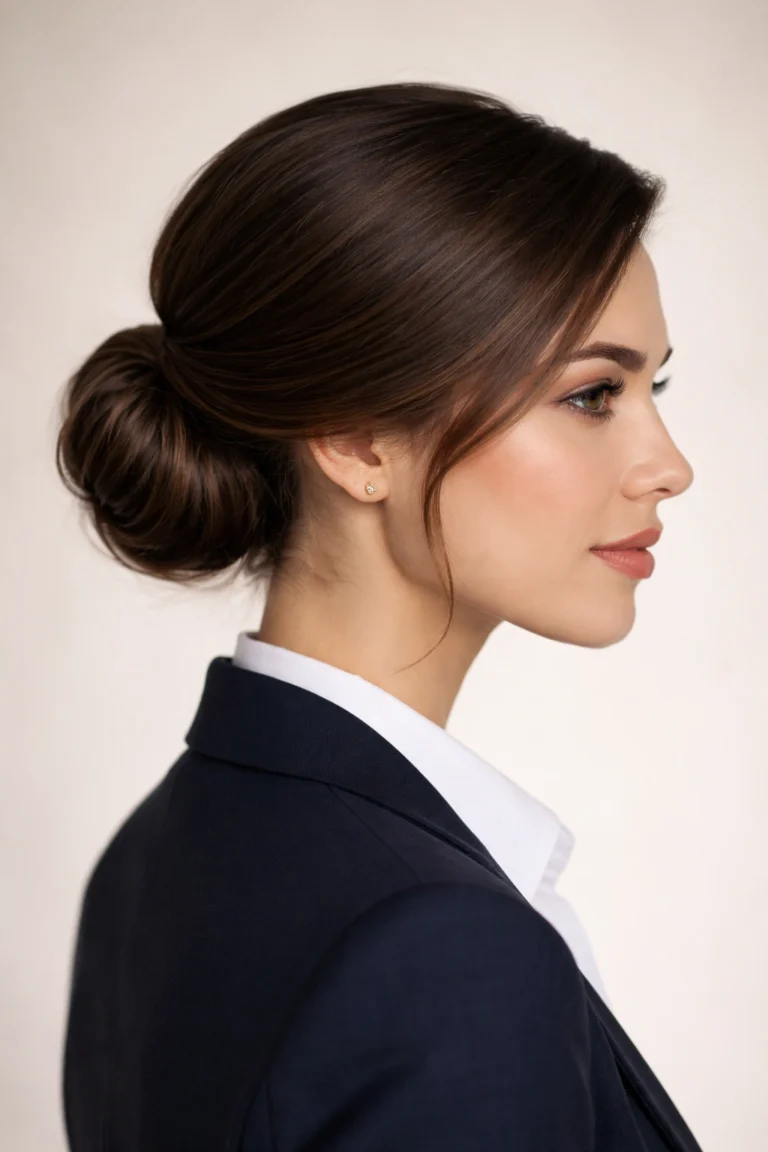
21. The Side Bun for Thick Hair
Gather everything to one side at the nape and build your bun there — sectioned twists, pinned one at a time, just like the low bun technique. The side placement is flattering on thick hair because it breaks up the visual mass; a centered bun on very thick hair can look heavy, while the asymmetry looks intentional and chic.
Sweep to the side opposite your part for the most natural drape. Keep it low — a high side bun on thick hair throws off your visual balance. Leave the texture slightly soft rather than scraped-back; the softness contrasts beautifully with the substantial shape.
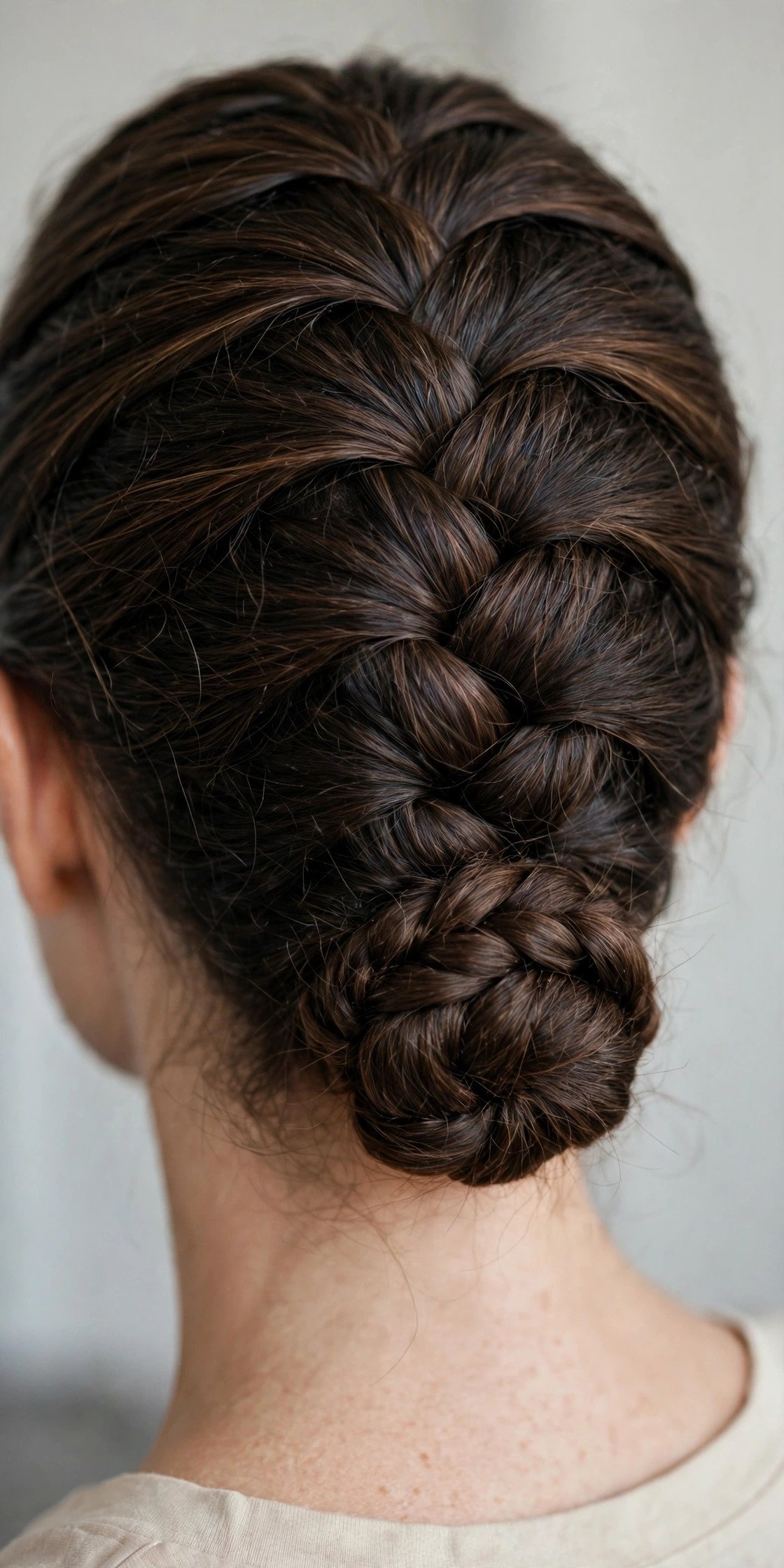
22. The Dutch Braid Into a Bun
Ending with the ultimate thick-hair workhorse: Dutch-braid from the hairline back along one side (or both sides meeting at the back), then coil the remaining length into a bun at the nape. The braid anchors the front — no flyaways, no loosening — while the bun contains the length.
This combination solves thick hair’s two biggest problems at once: the braid distributes weight across the scalp so nothing pulls, and the bun keeps the mass compact. It’s the style that survives the longest days, the windiest commutes, and the most back-to-back meetings without a single touch-up. Learn this one and you’ll use it weekly.
CONCLUSION
Thick hair doesn’t need to be fought — it needs strategies that respect its weight and volume. Section your updos, double your elastics, cross your pins, and choose styles that distribute rather than concentrate. Do that, and your hair stops being a morning battle and starts being the asset it actually is.
📌 Save this post to Pinterest so you have work hairstyles inspiration ready whenever your morning routine needs a refresh!